Natwest Pig Lady Hilary (Wade)
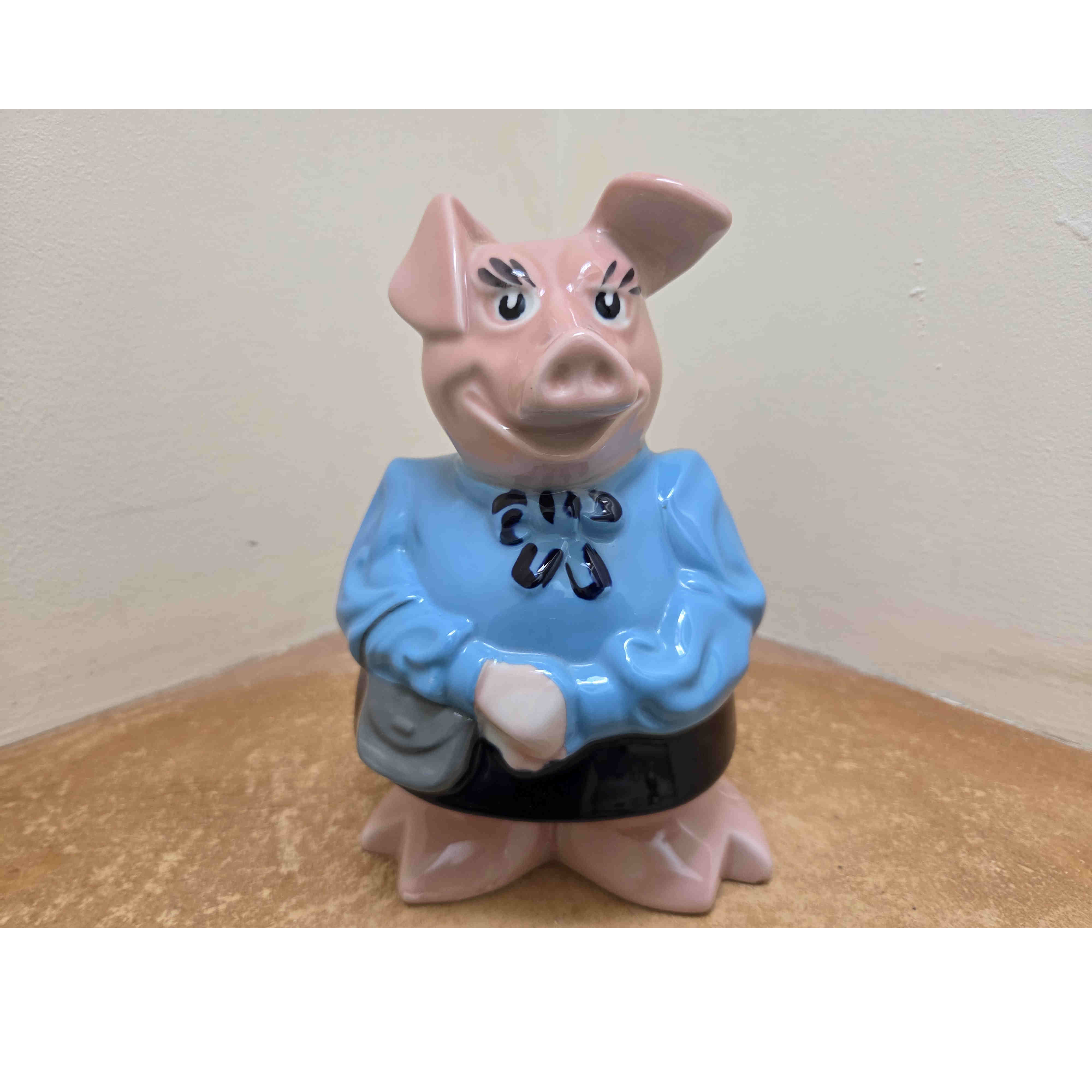
Natwest Pig Lady Hilary (Wade)
This curiosity is available to purchase directly from Sebastians Curios.
Buy Direct →Buy Direct opens your email client with the enquiry ready to send. If you don't have an email application set up, or would prefer to use a different email address, use Copy Email and send it to [email protected].
We'll then get back to you to confirm your enquiry and send you a PayPal invoice for secure payment if you wish to purchase the item.
Type: Banking/Piggy Banks
Era: 1980s
Condition: Very Good (See Description & Photographs)
About This Curiosity
Lady Hilary is one of the familiar characters from the famous NatWest piggy bank family. She is in excellent overall condition and retains her original NatWest stopper.
As with these distinctive pigs, there are small variations in the finish due to the hand-processing involved in their manufacture, meaning no two examples are exactly alike. On this example, the navy blue of her skirt is slightly lighter in places, where the paint appears to have been applied more thinly, giving her an individual hand-finished appearance.
There is also a slight imperfection on one foot, which sits beneath the glaze and appears to have originated during manufacture rather than through subsequent damage. Aside from these factory finishes, Lady Hilary displays very well and is in excellent condition.
Toys and Collectibles: Sebastian's Curiosities specialises in vintage items and collectibles intended for adult collectors, rather than toys for children. Even where an item was originally marketed as a toy, it is included in our collection because of its vintage or collectible interest. Such items should be treated as collectibles, are suitable for adults only, and should not be purchased for children or left within their reach.
Please read our Buying and Owning Vintage Items Information before making a purchase.
Related Curiosities
Sebastian's Curiosity
Sebastian's Curiosity
It's interesting to wonder about the story behind this little pig.
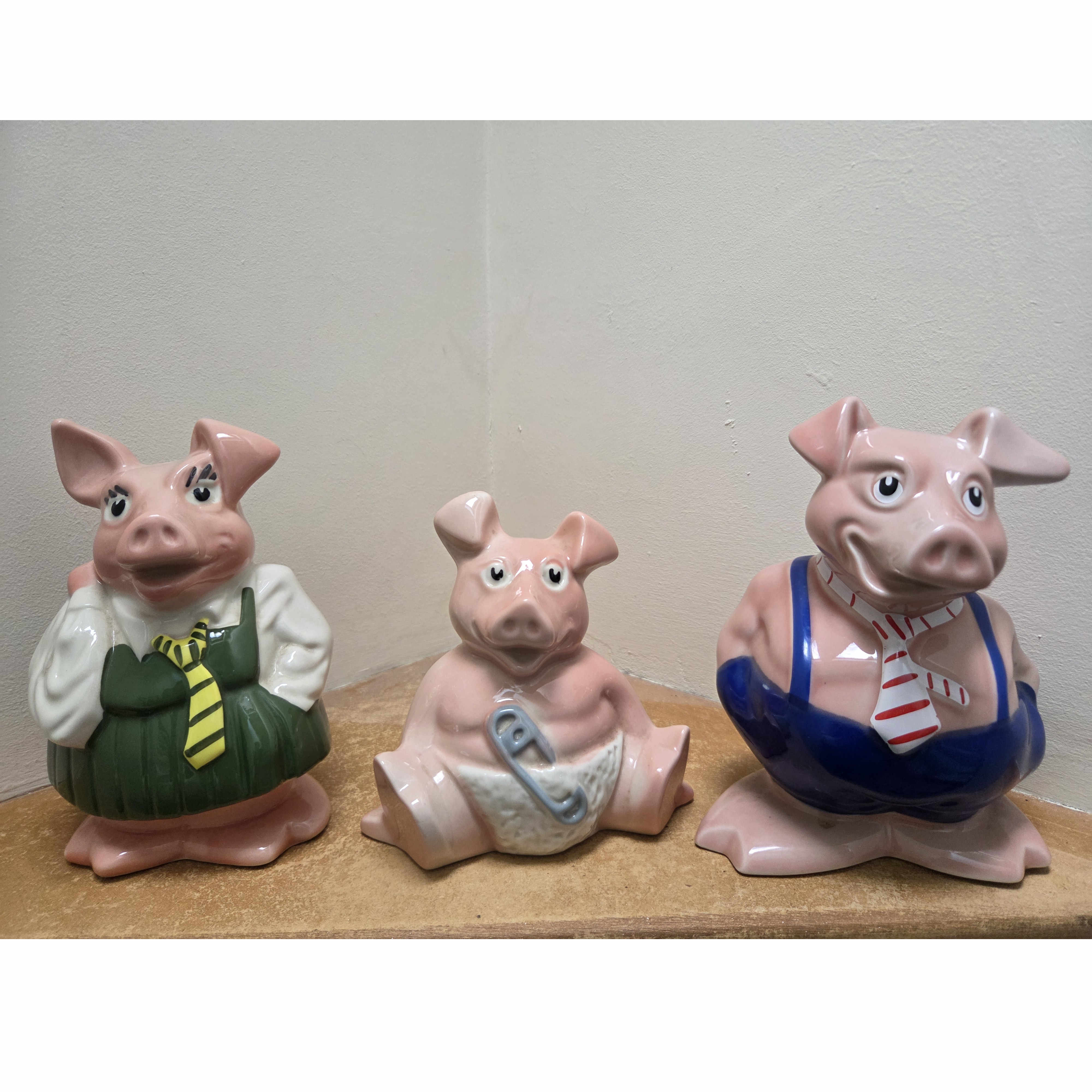
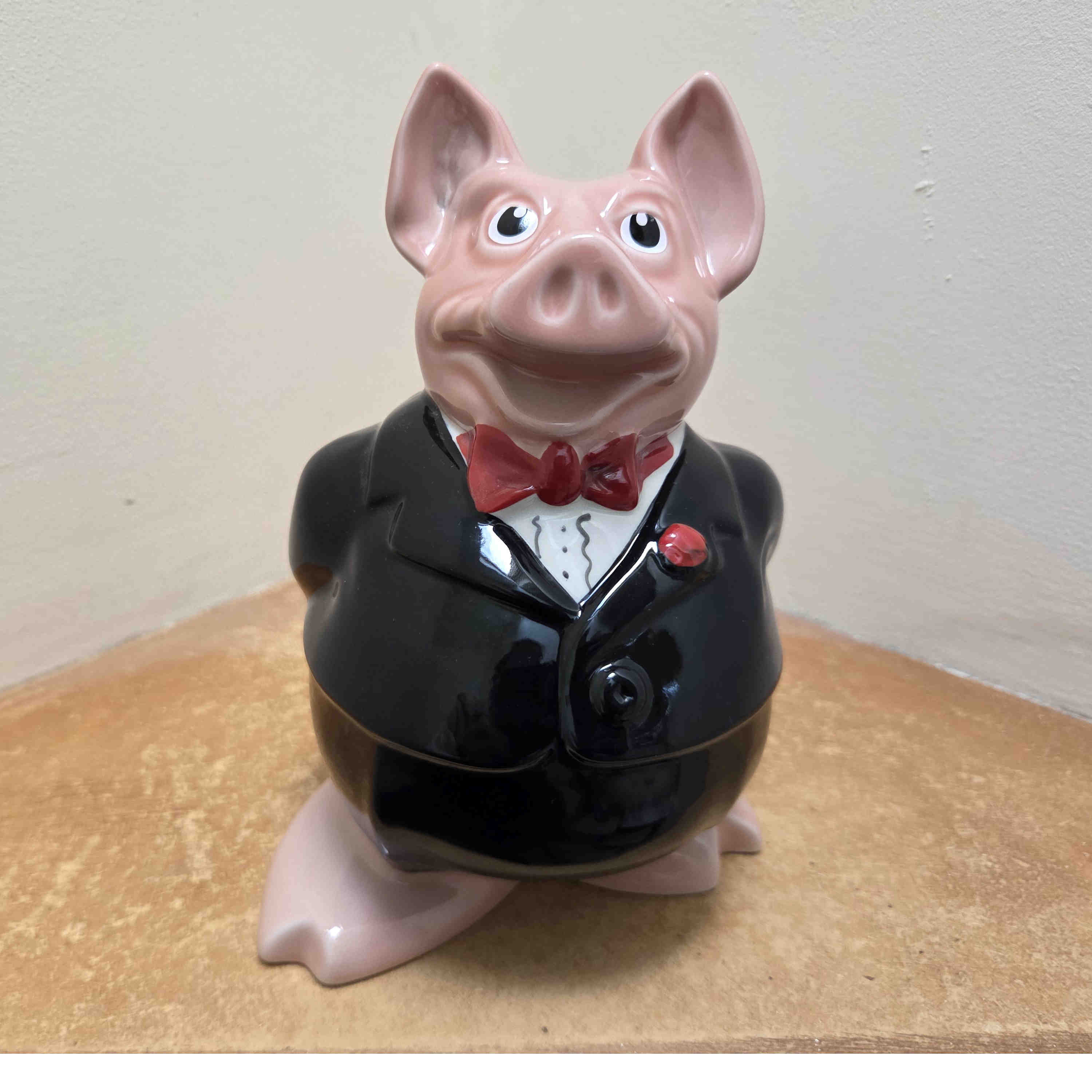
Back in the 1980s, collecting the NatWest pigs was a little journey in saving for many children. Each pig marked another milestone, from Woody at the beginning, through Annabel and Maxwell, to Lady Hilary at £75 and finally Sir Nathaniel at £100.
Reaching that £75 milestone would have taken a fair amount of saving for many children, making Lady Hilary a particularly special reward. I can't help wondering how it felt when a child finally had enough in their account to take her home. Was she proudly carried home and given a special place on a bedroom shelf? As the 4th pig in the collection, Lady Hillary would have lined up proudly with the rest of her family leaving the young saver aiming at £100 to complete the full collection.
Of course, we have no way of knowing this particular pig's story. She may have been treasured by a young saver for years, or perhaps she has passed through several hands since then. That little mystery is part of the charm of vintage objects: they survive long after the details of the lives they once belonged to have faded away.
And I rather like to imagine a child in the 1980s reaching that £75 milestone, looking at their new Lady Hilary and feeling that all those little deposits had finally added up to something special.
The History Behind This Curiosity
Lady Hilary is one of the original characters from the much-loved NatWest piggy bank family. These pigs were part of a savings scheme that encouraged children to put money aside, with Lady Hilary awarded to children who reached a substantial £75 savings deposit.
The NatWest pigs became familiar to generations of savers, turning the achievement of saving money into something children could see and enjoy. Each character had its own distinctive appearance, and the hand-finished nature of the pigs means that small differences in paintwork and finish can make individual examples unique.
Today, these nostalgic money boxes remain popular with collectors and with people who remember receiving, or saving up for, their own NatWest pig. Lady Hilary offers a charming little connection to that era of British banking and childhood saving.