Nokia 3310
Part of The Personal Collection
This curiosity is part of the personal collection and is not available to purchase. Some objects are part of the personal collection and shown here simply because of their history, character or personal significance, and this is one of them.
The item remains here as part of the Seb's Curiosities archive, allowing you to explore its story and history even though it is not for sale.
Type: Phones
Era: 2000s
Condition: Working (See Description & Photographs)
About This Curiosity
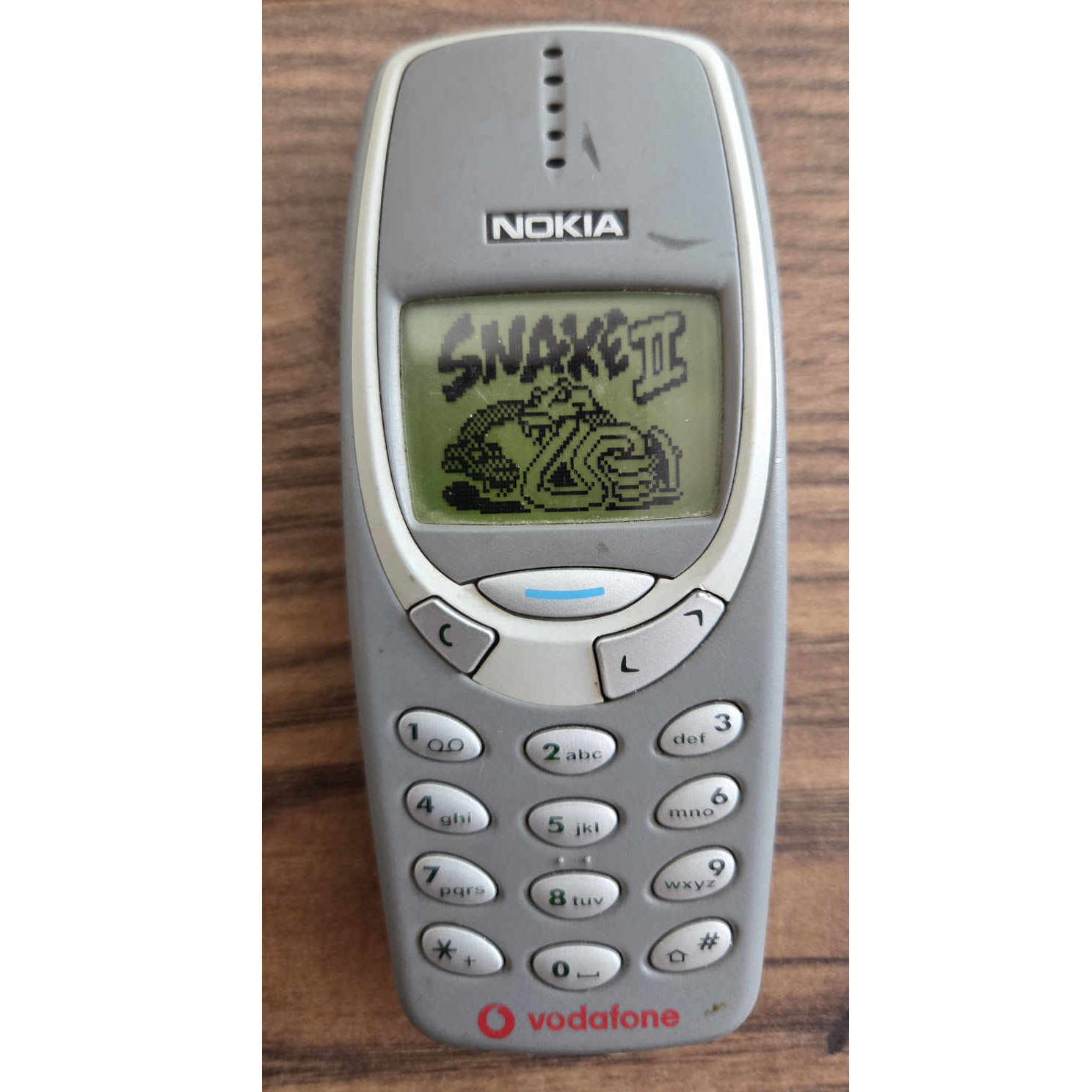
An iconic example of the Nokia 3310, one of the most recognisable mobile phones of the early 2000s. This example remains in working order and is in good condition for its age, making it a nice reminder of the days before smartphones, when a mobile phone was primarily used for calls, texts and, of course, a game of Snake.
This phone is part of the personal collection and can (and is) still be used as a working mobile phone when needed.
Sebastian's Curiosity
Every now and then, I come across an object that looks completely ordinary until I remember just how different the world was when it was new. The Nokia 3310 is one of those objects.
I find it particularly curious because I can look at this little phone and remember a time when a mobile phone was, for most people, just that: a mobile phone.
There were no endless notifications, no social media feeds waiting in your pocket and no expectation that your phone should tell you the weather, show you a map, play videos or let you browse almost the entire world from wherever you happened to be.
Instead, you could make a call, send a text message, play a game and, if you were feeling particularly adventurous, spend far too long choosing which ringtone you wanted to hear when you got a call.
And then there was Snake II. For a generation of mobile phone owners, the simple act of guiding that growing snake around the tiny monochrome screen could provide an extraordinary amount of entertainment. Nokia itself has since described the 3310, the Snake game and the iconic Nokia ringtone as enduring parts of the nostalgia surrounding the brand.
Perhaps that is why the 3310 still feels so familiar today. It wasn't trying to be a computer in your pocket. It was a phone, and it did that job remarkably well.
But whenever I see one, I can't help wondering how many people remember their first one, who they used to call, the messages they sent and just how important that little plastic handset once seemed.
The History Behind This Curiosity
The Nokia 3310 arrived at the turn of the millennium, at a time when mobile phones were becoming increasingly common but the smartphone era was still some way into the future.
Today it is almost difficult to imagine a mobile phone without internet access, apps, cameras, streaming services and social media. But the 3310 belonged to a much simpler world. Its purpose was primarily to let you make calls and send text messages, with a selection of useful extras and games providing the entertainment.
There was no modern smartphone screen and no app store waiting to be filled. There was certainly no expectation that you should be permanently connected to the internet. Mobile data technology was developing - Nokia was already working on the evolution from GSM towards mobile internet services around the time the 3310 appeared - but this was very different from the always connected smartphones that would follow.
For many people, even having internet access at home was still a relatively new experience. Getting online could mean sitting at the family computer, waiting for someone else to finish using it and, for those with dial-up, listening to that unmistakable sequence of electronic noises as the modem connected - a noise I can still hear to this day. The idea that everyone would eventually carry an internet connected computer in their pocket would have seemed extraordinary.
The 3310 therefore arrived at an interesting point in technological history. Mobile phones were moving from being expensive devices associated with business and status towards becoming everyday objects used by a much wider section of society.
And Nokia understood that a phone could be more than a tool. The 3310 allowed users to customise their experience with different ringtones, while its games gave owners something to do when there was no social media, streaming service or app store to keep them occupied.
Snake II became particularly memorable. The concept was wonderfully simple: guide the snake around the screen, eat the objects appearing in its path and try not to crash into yourself. Yet for many people, it became one of the defining experiences of owning a Nokia.
Then there was the ringtone. The familiar Nokia tune, derived from the melody Gran Vals by Francisco Tarrega, had already become strongly associated with Nokia by the 1990s. Nokia dates its iconic ringtone to 1994.
Looking back, the Nokia 3310 represents much more than an old mobile phone. It belongs to the period just before the mobile phone became the all purpose digital device we know today a time when your phone could be sitting in your pocket without constantly demanding your attention.
That is perhaps why the 3310 has become such a nostalgic object. It reminds us not simply of an old piece of technology, but of the world around it: a time of text messages, tiny screens, personalised ringtones, Snake II and phones whose batteries could seemingly last for days.
A Little Phone That Became a Big Memory
It is interesting to think about how much our relationship with phones has changed since the days of the Nokia 3310.
How many hours do we spend looking at our phones now? We carry them everywhere, use them to take pictures, read the news, watch videos, browse the internet, communicate with friends, navigate unfamiliar roads and fill those little moments when we have nothing else to do.
If you are reading this page on your smartphone, that in itself is quite a nice comparison. You could not have done the same thing on a Nokia 3310. There was no screen large enough, no modern web browser, no social media and no expectation that your phone should provide an endless stream of information and entertainment.
The 3310 offered something much simpler. You made a call. You sent a text. You played Snake II. Perhaps you changed the ringtone, composed your own tune and wondered how long the battery would last. Then you put the phone back in your pocket and got on with your day.
Perhaps that simplicity is part of the affection the 3310 has built up. It was an important piece of technology in its time, but it did not demand your attention in quite the way our phones can today.
And perhaps the little Nokia's reputation will eventually outlast some of today's much more sophisticated smartphones. Or maybe, twenty years from now, someone will look at a smartphone from the 2020s and smile at how primitive it seems compared with whatever technology has arrived by then.
After all, that is one of the curious things about technology: the gadgets that once seemed impossibly advanced can eventually become the antiques that remind us just how far we have travelled.